

Last week I was asked to do a talk at DCMS - the UK’s Department for Culture, Media & Sport - about where the media is heading.
It’s a place where policy, culture and media collide, and where people are trying to answer some genuinely hard questions about what television even is now, how platforms fit into that picture, and how public value survives in a system that no longer resembles the one it was built for.
I was asked to talk to their team about where I see the future heading, but I came away thinking less about regulation and more about something simpler — and more fragile: trust.
WHEN TRUTH BECOMES A BETTING MARKET
There is now more content than ever. Soon there will be infinite content.
But trust is going in the opposite direction.
This isn’t just about media. It’s about society more broadly. Trust in institutions, in shared reality, in what’s true, in what’s worth paying attention to. You can feel the erosion everywhere, in politics, in culture, in how people talk to each other online, and in how quickly bad information spreads.
This week, CNN announced a partnership with Kalshi, a prediction market that allows viewers to wager on current events, elections, cabinet reshuffles, geopolitical outcomes, even natural disasters, with those odds now appearing within coverage itself. CNBC have announced a similar deal.
On the one hand, it makes sense. Media organisations are under incredible pressure. Revenue models are breaking, attention is harder to hold, and survival increasingly demands uncomfortable decisions. But this is still a significant moment.
In an industry already struggling to retain the trust of its audiences, embedding betting markets into news coverage is unlikely to rebuild that confidence. More fundamentally, when financial speculation becomes woven into the act of reporting reality, even subtly, it raises a serious question: what happens to trust when truth and incentives begin to blur?
These decisions may make short-term commercial sense, but over time they corrode confidence, not just in individual brands, but across the media ecosystem as a whole. They also risk shifting something way more fundamental: how reality itself is understood.
//
A Black Mirror take…
As traditional media loses authority, there’s a real risk that truth starts to get replaced by expectation. Once financial expectations begin shaping coverage, they don’t just describe reality, they influence it. Markets move, reputations shift, public opinion hardens, and incentives change. At that point, journalism isn’t just reporting on the world; it’s quietly participating in systems that help shape outcomes.
The danger here isn’t one bad deal, one bad actor or one mistake. It’s an industry making increasingly desperate decisions, and a system that’s losing trust because it rewards immediacy, scale and monetisation above everything else. Alongside a politics that increasingly thinks in short-term, single-cycle terms rather than generational impact.
If those become the only metrics that matter, the logic eventually eats itself. You don’t need anyone acting in bad faith. You just need incentives that nudge everyone in the same direction.
Research consistently shows that most people still care about important stories, and understanding the world, but fewer than half now say they trust the media delivering it.
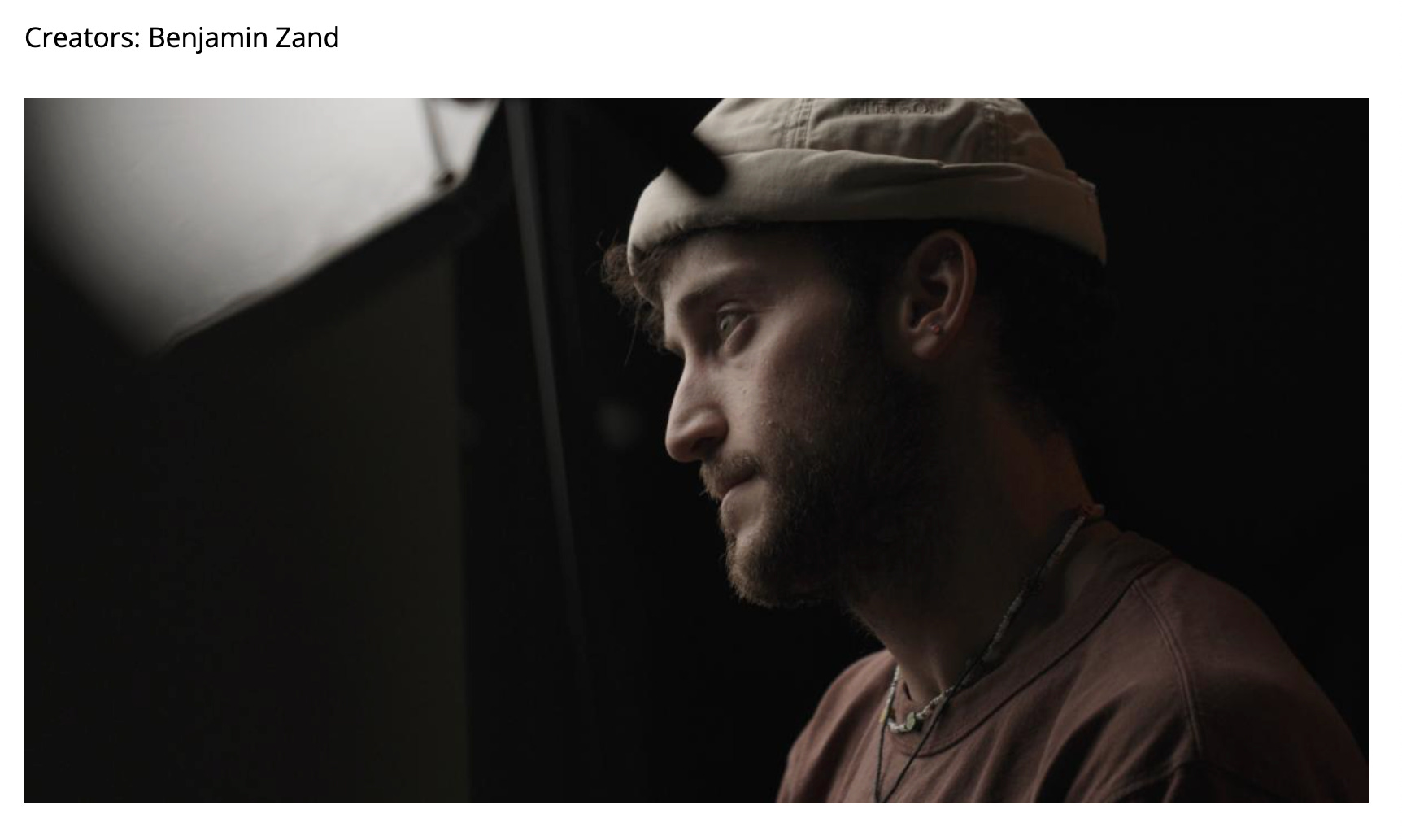
This week one of our investigative feature documentaries was listed by the British Film Institute as among the best of British TV of 2025. Not because accolades are the point, but because it’s a reminder that there is still an appetite for work that takes its time, deals honestly with complexity, and doesn’t flatten the world for easy consumption.
That appetite hasn’t gone away.
What’s missing is a system that consistently supports it.
THE FUTURE FOR INDEPENDENT PRODUCERS
This is where we need to be more honest about the state of the media, and the position producers increasingly find themselves in.
In the industry, budgets are tighter. Development timelines are longer. Risk is pushed downward. Producers are being asked to deliver more - more access, more sensitivity, more compliance - with less financial headroom and less long-term upside.
At the same time, as media companies chase their share of an increasingly fragmented attention economy, commissioning decisions skew toward what feels safest and fastest: celebrity-led formats, simplified true crime, repeatable ideas that travel easily but rarely stretch the form. The ambition narrows. Innovation slows.
Audiences notice that drift. Many respond by looking elsewhere - to platforms like YouTube - not necessarily because the work there is deeper or more rigorous, but because it feels different, less filtered, more immediate. What they often find instead is content that is even less regulated and less accountable, but novel enough to capture attention.
The result is a widening gap. Serious, complex storytelling struggles to survive commercially, while audiences splinter into parallel ecosystems, each with their own narratives, incentives and versions of reality. And the centre, where shared understanding used to live, becomes thinner and more fragile. This is a major problem for a functioning, cohesive society.
It is also why producers now have to think differently.
WE ARE ALL OUR OWN NETWORKS
Anyone making content today has to operate as a brand as well as a maker. That doesn’t mean chasing personality for its own sake, but it does mean thinking seriously about audience, community, distribution and sustainability alongside the editorial. These are no longer downstream concerns. They shape what gets made, how it’s funded, and how far it can travel.
The audience isn’t just the destination anymore, it’s the leverage. It affects independence, negotiating power, creative risk, and long-term viability. A producer with a direct relationship to viewers has more room to manoeuvre, more resilience when projects stall, and more freedom to take risks that wouldn’t survive in a purely commission-led model.
That shift demands a new level of entrepreneurialism. Creators are increasingly expected to think like operators: balancing editorial integrity with platform realities, community with scale, and long-term trust with short-term performance.
It’s also why we increasingly think of Zandland not just as a production studio, but as a network in its own right, one that can collaborate with major broadcasters and streamers, but also operate independently of them. Sometimes that means partnering with legacy media. Sometimes it means competing alongside them for attention, relevance and trust.
Our aim is to create work that is incredibly entertaining and compelling, but also revelatory, truthful and fair. We need to genuinely compete in the attention economy. But we want to also provide actual value and understanding. What we make has to be watchable. It has to be commercial. And it has to be able to stand on its own feet.
If it doesn’t, something else will take its place, and it won’t necessarily share the same values.
THE CASE FOR MAKING VALUE A METRIC
But there’s a responsibility that sits beyond individual producers.
For the people who hold power in this industry, commissioners, platform executives, funders, editors, policymakers, I think we need to broaden how success is judged.
Audience matters. Scale matters. Return matters too.
But trust and public value have to count as well.
Not as a slogan. Not as a paragraph at the end of a pitch. But as part of the actual decision-making process.
What does this project contribute to public understanding?
Does it clarify or just make things worse?
Does it build trust or strip it away?
What kind of society does it quietly help produce?
If we don’t start asking those questions seriously, we’ll keep optimising for short-term performance and long-term decay. And we’ll act surprised when the world feels more brittle, more cynical, and less liveable, even as the feeds are “performing.”
That’s not a future any of us (hopefully) want to inhabit. And it’s not one we should accept for the next generation either.
ALL IS NOT LOST
In short, I don’t think media is collapsing.
I think it’s transitioning.
But transitions are when bad habits get locked in, or better systems get built.
If we want a future where trust still means something, where audiences feel respected rather than exploited, and where serious storytelling doesn’t have to apologise for existing, then we have to be honest about how this all works, and deliberate about what we choose to reward.
That’s what I tried to articulate at DCMS. And if you’re in a position of power, you can actively shape this. Fund work not only because it performs, but because it matters - and because, over time, trust is one of the most valuable things media can still offer.
The incentives you reward don’t just shape balance sheets, they shape the information people live inside. And when that degrades, the cost isn’t abstract. It’s the world you wake up to every morning.
This is what we’re trying to build at ZANDLAND.
Speak soon,
Ben Zand
Elsewhere this week:
In the latest episode of Untangled, we look at Australia’s decision to ban social media for under-16s, and what it reveals about how governments are starting to treat digital platforms as a public health issue.
And we spoke to C21Media about Zandland’s digital-first documentary-making and our predictions for 2026, you can listen here from 41:32.