

Most of my adult life has been spent circling the same questions.
Who the hell am I?
What am I trying to build?
What value do I actually offer the world?
I don’t think these are questions you ever fully “solve”. They just change shape as you get older. But they do become harder to ignore.
I turned 35 last week. I’m a dad now. I have 6 grey hairs in my beard. I run a company that employs people and ships work into the world whether I feel ready or not. And I’ve realised that a lot of adulthood isn’t about becoming more confident, it’s about becoming more honest with yourself.
About what you want, what you’re good at and what you’re willing to tolerate in order to keep doing the work.
I was reminded of this recently at a seminar, where someone explained, very confidently, that a key ingredient of success is confidence. That the people who make it are the ones who project certainty, belief, self-assurance — even when they don’t fully know what they’re doing.
I get why that idea sticks. Certainty is comforting. It reassures other people. Sometimes it reassures us too.
But the longer I’ve been doing this, the less convinced I am that confidence is the thing that actually sustains you.
I don’t think confidence is overrated. It’s incredibly useful. You need it to act. To put work into the world. To back a decision long enough to test it. Without it, nothing starts.
What I’ve learned, though, is that confidence about action is very different from confidence about outcomes.
On a day-to-day level, I almost never feel confident that a specific thing we’re doing at Zandland will work. We’re constantly trying new ideas, new formats, new ways of working. Most of them are unproven. Quite a few don’t work at all. Rejection is the unrelenting background noise of my life.
Confidence comes and goes. Often it’s not there.
What keeps me going through that turmoil isn’t certainty about results. It’s confidence that the direction is right. That even when something fails, it fails in service of the right question.
Confidence helps you take the first step. A north star is what keeps you moving when the path disappears. And just as I’ve reached 35 with the relief of finally having a sense of my own direction, it turns out companies benefit from that same kind of growing up too.
A new Zandland
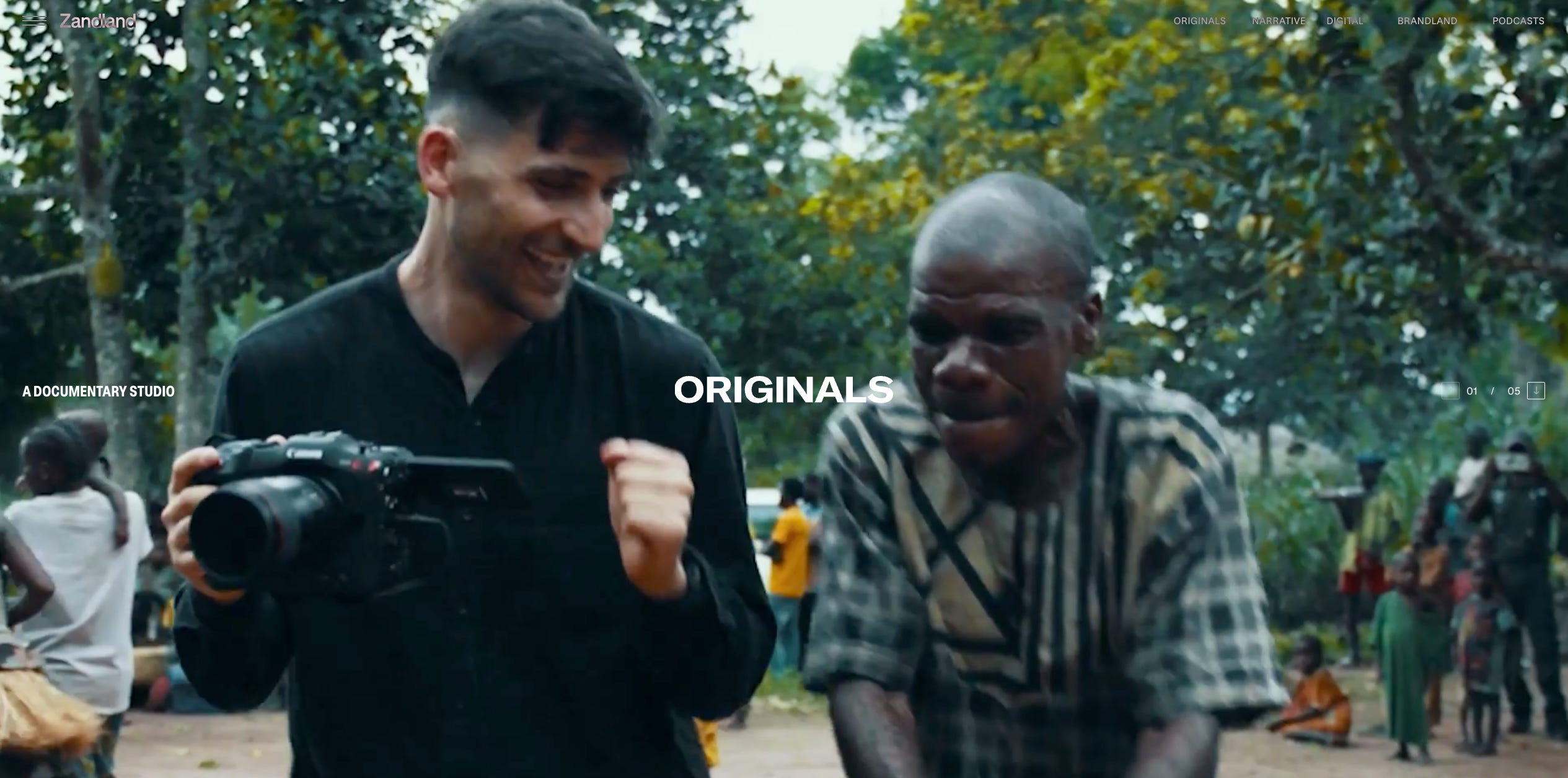
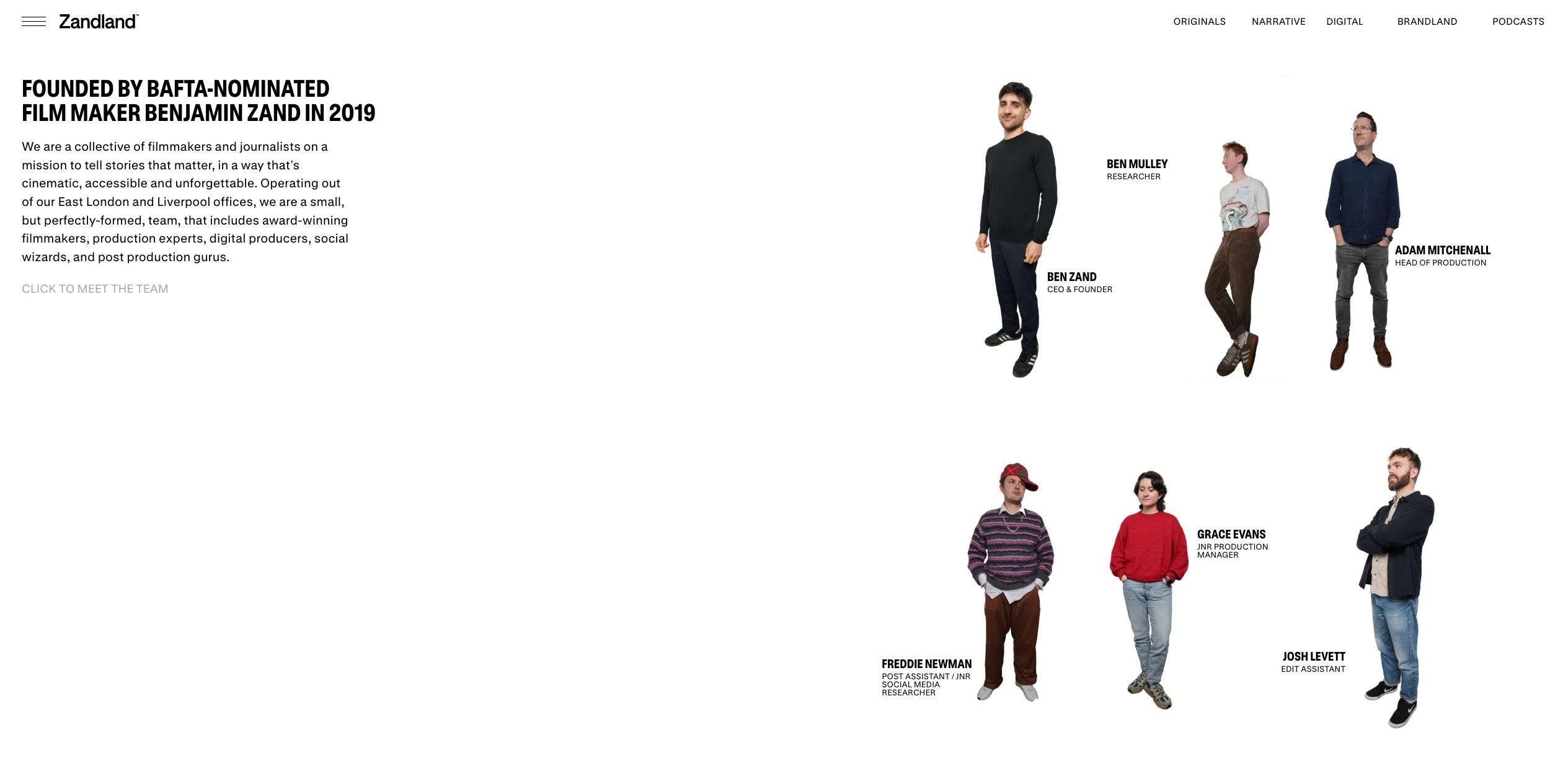
Today, we quietly launched a new Zandland website and visual identity.
It is arguably as monumental a moment in time as that of the election of Donald Trump in 2016.
Here it is: A New Zandland
But alas, there have been no fireworks. No launch party. No dramatic “new era” language.
Of course, no one other than us really cares, which is how you know it’s probably the right moment to do something like this.
But it does feel like Zandland is growing up.
For the record: we are no longer ZANDLAND in all caps.
We are now Zandland.
Capital Z. Lowercase everything else.
We’re no longer smoking weed at the back of the family party in baggy trousers… we’re drinking a glass of white wine, still judging the music, just doing it more quietly.
And the truth is, this isn’t about aesthetics. It’s about alignment.
My favourite word, “clarity”
Rebrands don’t magically fix anything. They don’t make better films. They don’t solve broken media economics. And they definitely don’t make deadlines easier.
But they can mark a shift.
For us, this one reflects something that’s been happening for a while now: Zandland is no longer figuring out what it might be. We’re clearer about what it actually is — and just as importantly, what it isn’t.
That clarity hasn’t come from confidence. It’s come from discomfort.
From launching things that feel awkward.
From putting work out before we’re entirely sure it’ll land.
From throwing ourselves out to the wolves for feedback, criticism, and the occasional internet pile-on.
Each day recently we’ve been doing things that feel exposing in small but meaningful ways — trying formats we don’t fully control, saying no to work that looks good on paper but feels wrong in practice, trusting our instincts more and accepting that sometimes they’ll be wrong.
That’s the growth spurt. And it’s rarely elegant.
Knowing our lane
Out of all of that, something clearer has emerged.
Zandland now operates across four distinct lanes — not as a strategy slide, but as lived reality:
Zandland Originals — Our fully independent, self-funded work — ideas we originate, finance, and release ourselves, built first and foremost for a direct relationship with our audience.
Zandland Narrative — premium documentaries made in partnership with streamers and broadcasters. Big ambition, long runway, proper scale.
Zandland Digital — Digital-first content and storytelling made with broadcasters and platforms — built specifically for YouTube and social, and designed to travel natively online rather than be adapted later.
Brandland — Our branded-content arm, where we work with organisations and brands who want impactful, editorial-led storytelling that makes noise.
That structure didn’t appear overnight. It’s the result of years of trial, error, mild panic, and occasionally asking ourselves very honestly: what are we actually good at, and what should we stop pretending to be?
The new site and identity aren’t about reinvention. They’re about acceptance of who we are right now.
A week of signals
It’s also been one of those weeks where culture and media quietly underlined why this stuff matters.
Bad Bunny’s halftime performance was freaking amazing — unapologetically Puerto Rican, deeply specific, and completely uninterested in translating itself for anyone else. And precisely because of that, it felt global. A reminder that clarity beats universality every time.
At the other end of the spectrum, the continued hollowing-out of the Washington Post has been hard to ignore. Not a dramatic collapse, but a slow erosion of institutional muscle — the kind that doesn’t trend, but fundamentally changes what journalism can sustain. And makes our mission to be a next-generation content company that tells important, impactful stories, all the more important.
And then there are platforms.
Coincidentally, this week I’m heading to Washington DC for a small, invitation-only YouTube summit with independent news and documentary creators — a room full of people trying to work out how to do serious, responsible storytelling on platforms optimised for attention and speed.
That conversation matters, because this isn’t a phase. This is where the audience already is. The real question is whether serious work shows up there and can make real money — or leaves the field to confidence merchants and hot-take factories.
Lowercase energy
So yes, we’ve grown up a bit.
We’re calmer. Clearer. Slightly less chaotic (emotionally, at least).
We’re not trying to be everything. We’re not chasing every trend.
And we’re definitely not pretending to have it all figured out.
But we are clearer about who we are, what we’re building, and what our work is for.
Confidence helps you act. Direction helps you endure.
Capital Z. Lowercase energy. Big-boy trousers. Same curiosity. Slightly better judgement.
As ever, thanks for being here and paying attention.
—
Ben Z
PS - if you’ve made it this far, you must reaaaaally be interested in Zandland. So I will be even more self-indulgent and say I had a nice moment in the last week when I was named on Realscreen’s 40 under 40 list for creating a “next-gen content company”. That meant a lot.