A few nights ago, I was tucking into a succulent kebab dinner with a group of close friends. The kind of meal where plates keep arriving unannounced, the conversation drifts between politics, work, relationships, and you quietly accept that you will develop gout within 48 hours due to the volume of meat consumed.
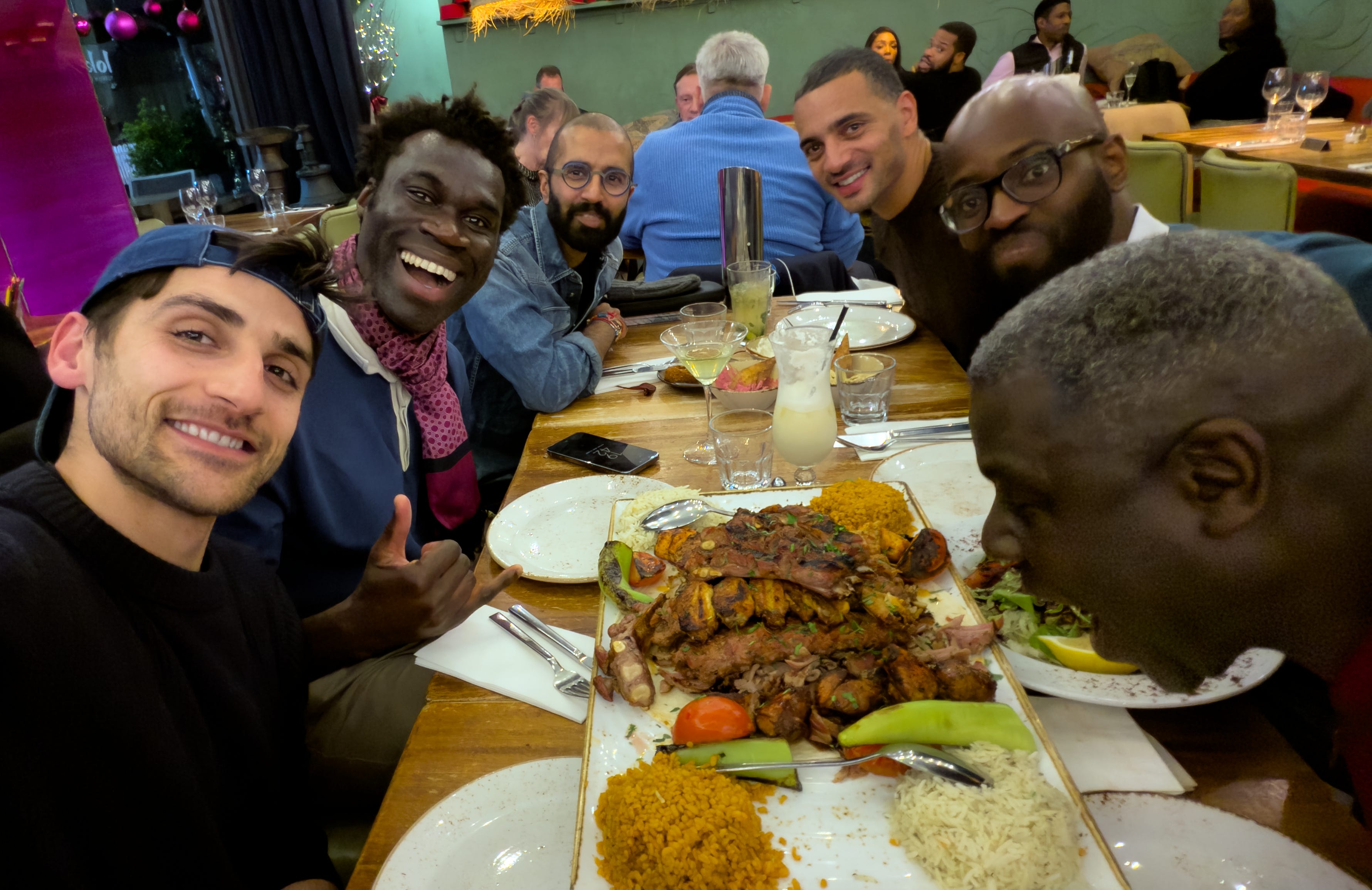
Halfway through, one of my friends turned to me and said, bluntly:
“Why is the media always so negative? Why do Zandland’s films always show what’s broken and not what’s working?”
It wasn’t hostile, but it was direct in the way only friends can be. And it landed.
I pushed back a little. I don’t actually think everything we make is bleak. We focus on understanding human behaviour, power, culture, and that sometimes means interrogating uncomfortable truths. But, he wasn’t entirely wrong.
Not just about Zandland.
Not just about the media.
But about humans more generally.
We are very good at diagnosing what’s wrong.
We are much less comfortable, and sometimes dismissive, of what’s working.
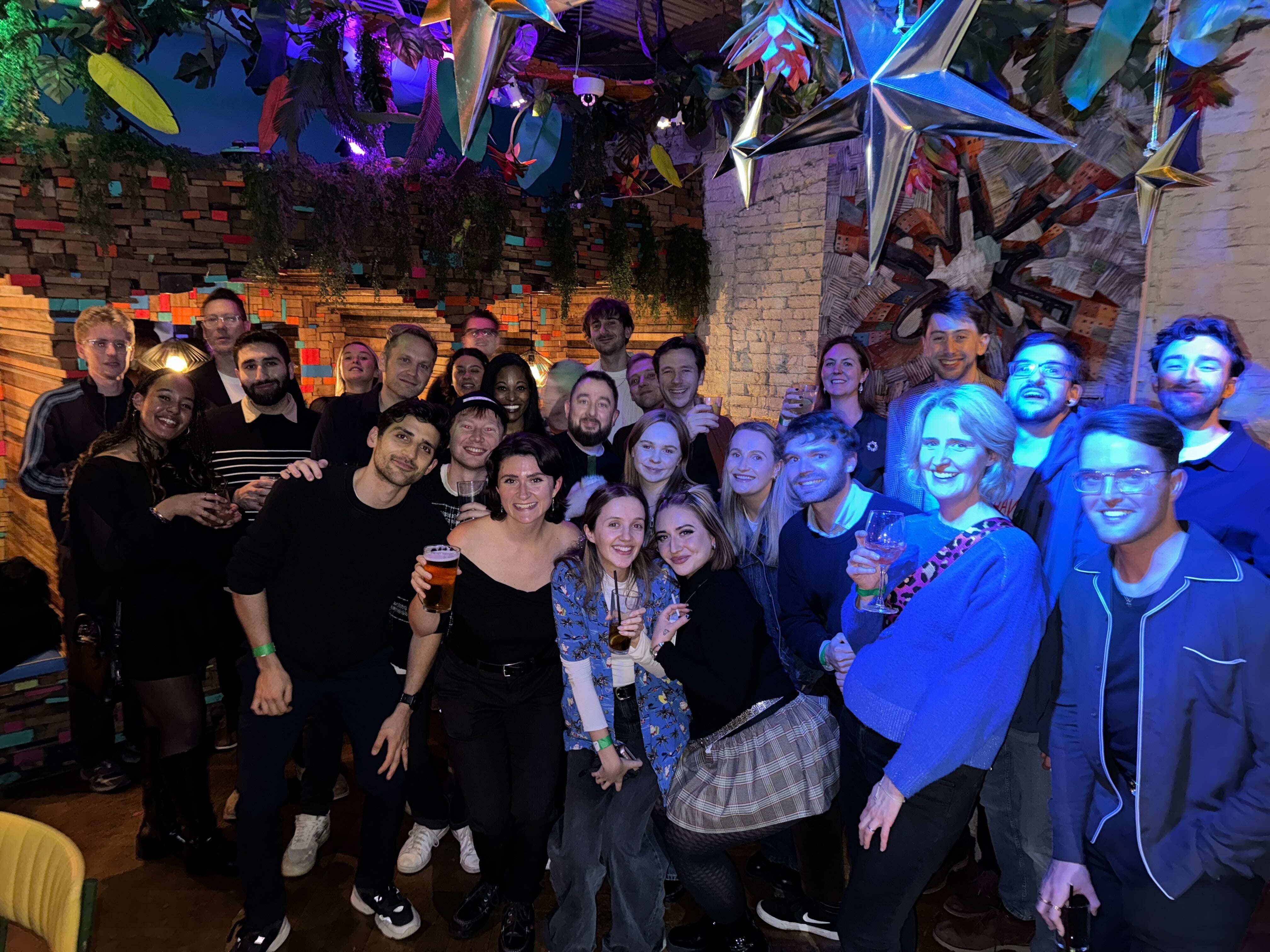
So, in the spirit of Christmas, as I sit in an empty office surrounded by chocolate wrappers, I decided this issue of the newsletter would do something slightly different.
I want to write about what’s making me, and my team of Zandlanders, optimistic about 2026. About the industry. And about the world more generally.
THE MOOD RIGHT NOW
At the moment, people have a lot of reasons to be worried.
There’s a sense the world isn’t working properly. Like we are on the precipice of chaos. And the industry I work in, the media, is changing. Budgets are shrinking. Commissioning is slower and more cautious. AI is already reshaping workflows and, in some cases, replacing work people relied on. Long-standing career paths feel unstable, and for freelancers in particular, the future can feel uncertain.
That anxiety is real. And it’s rational.
Layered on top of that is something more basic and human.
We have a structural bias toward negativity. Not just in the media, but in how we process the world more generally. That bias isn’t ideological. It’s neurological.
Humans are threat-detecting machines. Our brains are wired to notice danger before safety, loss before gain, risk before progress. Bad news travels faster because fear holds attention.
So when industries shift, when technologies disrupt, when institutions wobble, our default response is often to assume the worst.
That doesn’t mean things aren’t hard. They are.
But it does mean our perception can tilt darker than reality.
Which is why it feels worth saying that, despite all of this, I feel more positive about the media, and the world, than I did a year ago. And I’m excited for 2026.
WHY I’M MORE HOPEFUL ABOUT MEDIA THAN I WAS A YEAR AGO
The industry is under real pressure. Budgets are tighter. Risk tolerance is low. Trust is fragile. Old models are breaking.
But cracks are also where new things form.
Audiences are actively choosing what they trust
For the first time in decades, audiences aren’t captive. They follow people, not institutions. They reward honesty, specificity, and voice.
That’s painful for legacy systems, but healthy for culture, and a genuine opportunity for creators without major overheads.
Power is redistributing. Slowly. Unevenly. But meaningfully.
Serious storytelling hasn’t disappeared, it’s migrating
The appetite for depth, nuance, and complexity is still there. What’s changed is where it lives.
YouTube, podcasts, newsletters, and direct-to-audience platforms are no longer side projects. They’re primary arenas for trust-building and long-form thinking.
That isn’t the death of an industry. It’s a rebalancing.
You no longer have to wait for permission
This is the biggest and most exciting shift of all.
The barrier between idea and audience has collapsed. That’s unsettling, and incredibly liberating.
It means creators can test, build, fail, refine, and grow in public. Development no longer has to live entirely behind closed doors. Independence is no longer just philosophical; it can be practical.
At Zandland, that’s exactly what we’re building. Work that can live with broadcasters and streamers, but can also stand on its own.
WHERE I SEE THE OPPORTUNITIES IN 2026
Looking ahead, a few things feel increasingly clear.
Trust will be the most valuable currency, not scale alone
For years, success was measured almost entirely in reach. Bigger audience. Bigger platform. Bigger budget.
That logic is breaking down.
Audiences now ask: who made this, why should I believe them, and what do they stand for? In that environment, trust compounds. A smaller audience that genuinely believes in you is worth more, creatively and commercially, than a vast one that’s only half paying attention. That’s a huge opportunity.
Direct audience relationships unlock creative freedom
Creators with a real audience have more room to say no, to push back, and to take risks.
This doesn’t replace broadcasters and streamers, but it does change the power dynamic. Audience is no longer just the destination; it’s the leverage.
Hybrid models will outperform purist ones
The old binaries are fading. TV versus digital. Journalism versus entertainment. Serious versus watchable.
The work cutting through now lives in the overlap. Investigative stories that are funny. Serious reporting delivered with personality. Formats that can travel across platforms.
Audiences don’t care what box something sits in. They care whether it holds their attention and respects their intelligence.
Voice will matter more than neutrality
Audiences don’t want polemic, but they do want perspective.
They want to know who they’re listening to, what lens they’re seeing the world through, and why. Rigour still matters. Fairness still matters. But pretending to be invisible no longer builds trust.
Brands that stand for something will endure
In a chaotic media environment, people gravitate toward brands that feel coherent, human, and values-led.
What do you care about?
What will you not do?
What kind of stories do you believe matter?
For Zandland, 2026 is about leaning into that more clearly. Serious but watchable. Investigative but human. Commercial without being hollow.
And yes, taking my friend’s advice too.
Alongside difficult stories, we’re deliberately making more space for humour, joy, absurdity, and warmth. Because the world is strange and funny as well as serious. And understanding it doesn’t have to feel like punishment.
ZOOMING OUT
I’ll take this opportunity to also remind myself, and maybe some readers, that the world is, statistically, safer than it used to be.
This always sounds wrong until you zoom out.
Over the past few decades, global rates of extreme poverty, child mortality, violent crime, and deaths from war have fallen dramatically. Progress hasn’t been smooth, and recent years have been volatile, but the long-term trend still matters.
That doesn’t mean suffering doesn’t exist. It does. Profoundly.
But it does mean despair isn’t the only rational response.
Medical and scientific breakthroughs are accelerating. mRNA technology. AI-assisted diagnostics. Cancer survival rates improving year on year. Breakthroughs in fertility treatment, rare disease detection, and mental health research.
These stories rarely land emotionally because they don’t arrive with spectacle. But they are quietly reshaping millions of lives.
Younger generations are also more values-driven than they’re often given credit for. Despite endless narratives about apathy or fragility, many are more ethically aware, more sceptical of power, and more engaged with questions of inequality, climate, identity, and meaning than previous generations were at the same age.
They just don’t engage through the same channels.
A NOTE ON “NEGATIVITY”
Just to defend myself against friends who may want to call me out over future Turkish meals, focusing on problems is not the same as being pessimistic.
Investigating abuse of power, misinformation, exploitation, or systemic failure isn’t negativity. It’s accountability.
But optimism doesn’t mean ignoring reality. It means believing reality can be shaped.
Good journalism and documentaries don’t just expose what’s broken. At their best, they help people understand why things are the way they are, and where agency still exists.
That’s a balance I want us to get better at.
To round things off, I don’t think hope is naïve.
And making space for it, especially now, feels like part of the job.
From all of us at Zandland, we wish you a very Merry Christmas. And I really hope 2026 brings you all the happiness, and success, you deserve!
Speak soon,
Ben Zand
Founder, ZANDLAND