
We Followed The Cult of NatureBoy for Seven Years
The series is out now on Hulu

It’s late 2023. Eligio Bishop, who calls himself NatureBoy, who calls himself the Messiah, who calls himself God, is in a jail cell in DeKalb County, Georgia, awaiting trial on rape and false imprisonment charges. He has been calling me and my team regularly from jail, through a service called Securus that beeps every twenty minutes to remind you the line is monitored. He calls to discuss the documentary. He calls to negotiate. He calls to ask for money. He calls, sometimes, just to talk.
On one of those calls, he tells me he wants editorial control, money and royalties before he’ll participate in anything we make. I tell him that isn’t how we work, and that we are making the documentary regardless.
There is a pause. Then he says: “Either way I’m famous. Either way.”
He was facing life in prison. His group had collapsed. His followers had testified against him. His alleged crimes were weeks away from being laid out before a jury. And his genuine concern in that moment, like at all times, was his brand.
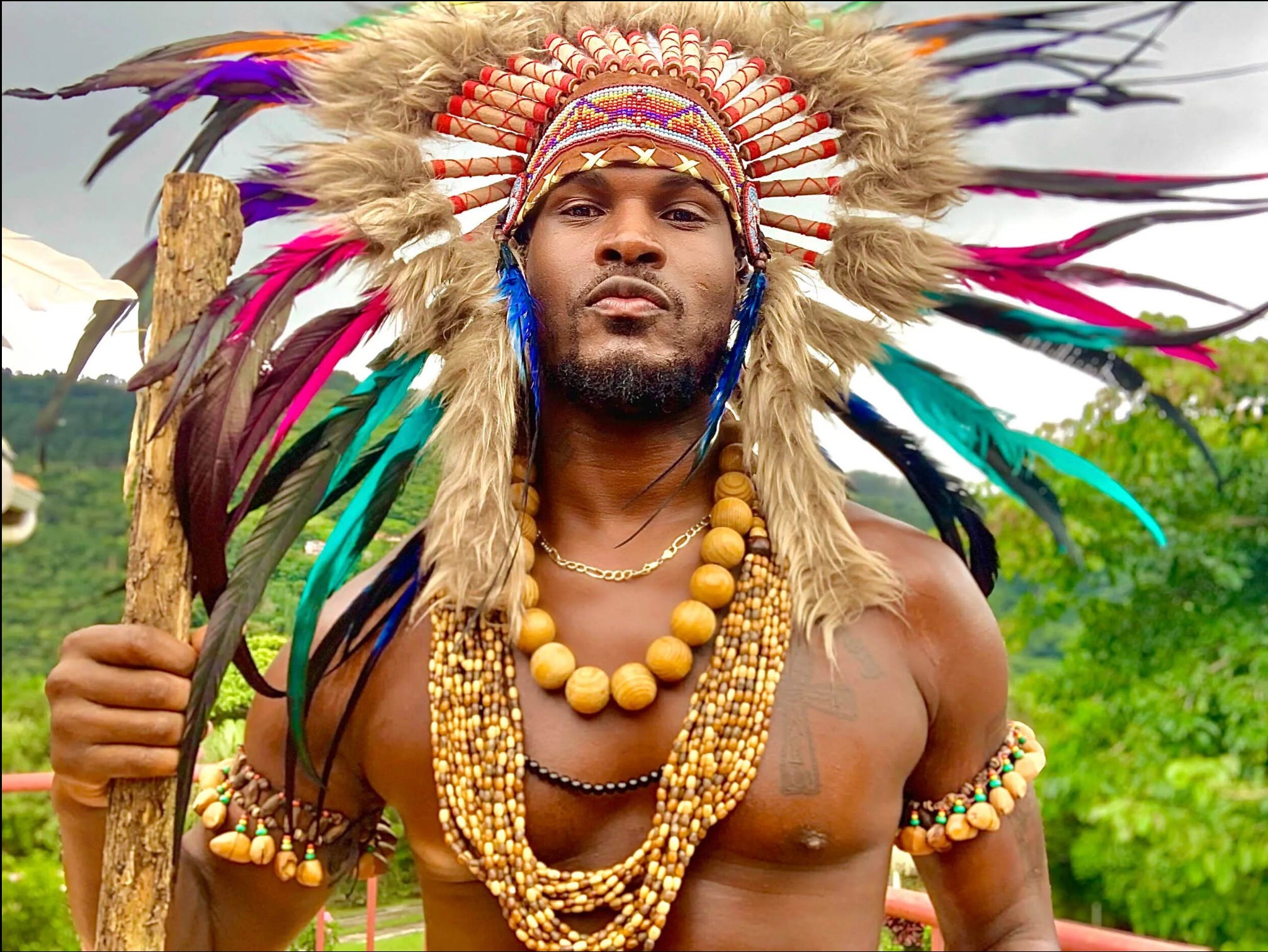
Eligio Bishop AKA NatureBoy
I’ve thought about that interaction a lot since. Because it wasn’t bravado, or at least not only bravado. It was a man stating what he believed to be a simple and permanent truth about himself: that his relationship with his social media followers was the most real thing about him. More real than the cell. More real than the charges. More real than anything the outside world was doing to him or saying about him.
What I kept thinking was this: he couldn’t separate himself from the identity that audience had helped build. Not wouldn’t. Couldn’t.
I’ve been trying to understand Eligio Bishop for seven years. The Cult of NatureBoy, which starts out now on Hulu, and comes to Disney+ worldwide in July 15th, is the Zandland team’s attempt to finally say what we’ve learned.
How it started
In 2017, I was a journalist working for the BBC. I came across a story online: a young woman from Newfoundland, Canada had gone missing. Her family had reported her to police. And then someone spotted her, not after a search, not through any official channel, in the background of a YouTube video. She was fine. She’d joined a commune in Costa Rica, led by a man who called himself NatureBoy.
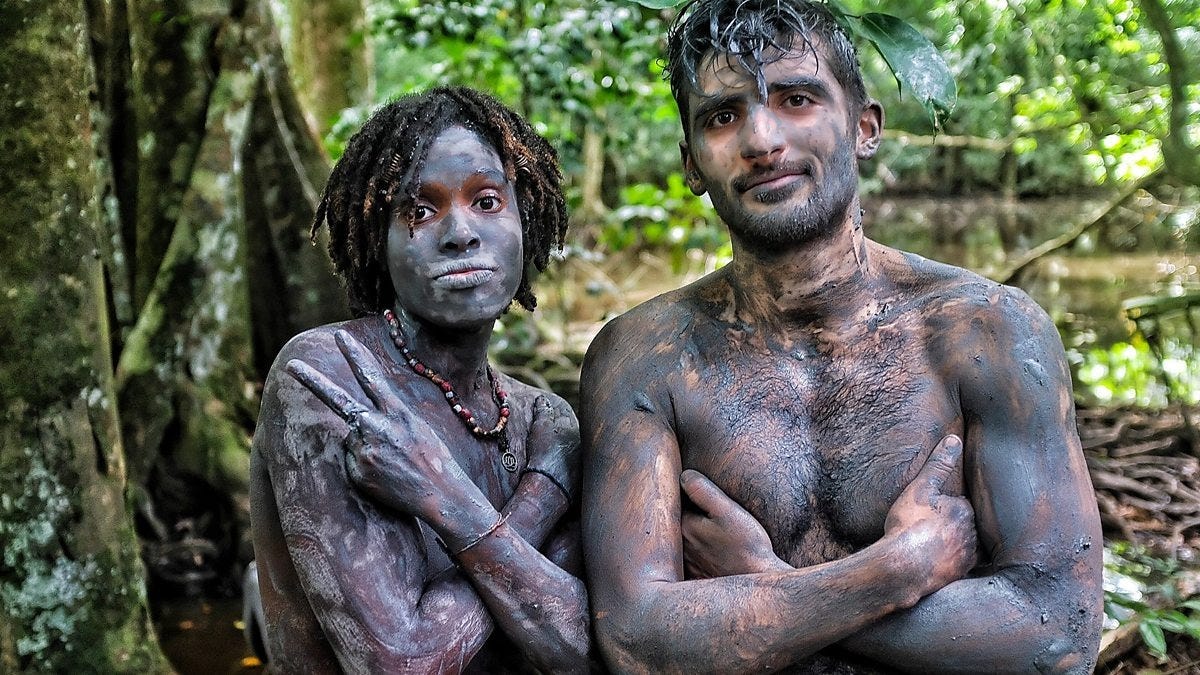
Still from Searching for Natureboy
I wanted to understand what that meant, so I flew out. I’d been speaking to NatureBoy over the phone, he seemed over the top, but largely welcoming, not obviously dangerous. But just as I arrived in Central America, he and some of his followers had been deported back to the US for overstaying their visas.
I was disappointed at the time to not be able to meet the group in person. But I did manage to meet a handful of people who had joined and eventually made it out the other side. At that point, the group was called Melanation. People from all over North America had travelled to the remotest parts of Central America to be there. They were young, thoughtful, diverse, and, in different ways, disillusioned with what countries like America had offered them.
I kept speaking to NatureBoy after his deportation. He told me the outside world was Babylon. He told me melanin was an antenna, connecting Black people to a higher consciousness. He told me the algorithm that recommended his videos wasn’t just code, it was prophecy, a system through which the right people were being guided to him.
I made a short documentary for the BBC. Filed the story. Got on a plane home.
And I thought I understood what I was looking at.
But I didn’t.
What I missed
Here is what I thought I was looking at in 2017: a charismatic man with unusual ideas, living an unconventional life, with a small group of followers who’d chosen to opt out of the mainstream. Eccentric, certainly. Potentially problematic, possibly. But within the broad range of human behaviour, within the long tradition of people deciding that the existing world isn’t working and going somewhere to try to build a different one, not obviously monstrous.
But here is what I was actually looking at: one of the first cults in American history to be built primarily through a social media algorithm.
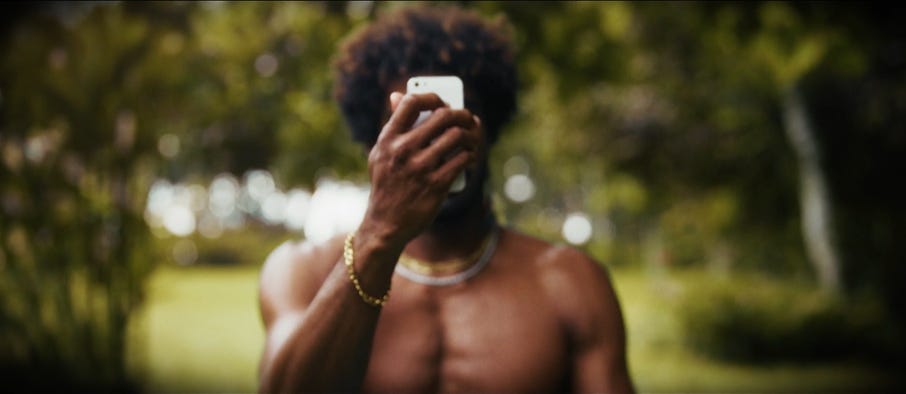
Still from The Cult of NatureBoy (out now)
The distinction matters enormously, because it changes the story from a curiosity into a warning.
What Eligio Bishop had figured out, and would later explain to me directly, from jail, with something close to pride, was that social media in 2017 was a radicalisation engine that nobody was (and still isn’t) properly regulating. You would watch a video about police violence against Black Americans. The algorithm would serve you another. Then another. Then Black consciousness content. Then natural living. Then melanin theory. Then NatureBoy, sitting on a rock in a Costa Rican river, speaking slowly and with complete conviction about why people needed to leave America and return to nature, and why he was the one sent to lead them there.
Aaron, a military veteran from rural Georgia whose mother had died when he was fifteen, who found himself at a crossroads after leaving the army, spending his evenings on YouTube looking for something he couldn’t name… found Bishop’s channel in 2017.
He told me: “I didn’t know what a YouTube algorithm was. I didn’t know that YouTube was recommending me videos based upon the videos I regularly watched. YouTube is an algorithm designed to grow engagement to keep people on the app so it can show more advertisers. That’s what it is.”
He knew that now. He didn’t know it then. That gap, between what the technology actually is and what it feels like when you’re inside it, is where Carbon Nation was born.
And Bishop wasn’t an unwitting beneficiary of this system. He understood it explicitly.
He told me, from his jail cell: “I use stuff to make people be like, ‘wow, what the hell, what did he just say?’ Always that. I do that on purpose because I know that’s gonna get a response. It’s a numbers game.”
He went viral more than once in the early years, usually by pushing things further than most people would. At one point, the group was denied boarding a flight, reportedly because of their hygiene, an incident that quickly became part of his growing notoriety online. In another video, he described, in graphic detail, a sexual encounter he’d had in front of his infant son. That clip drew widespread attention, including from authorities, and brought tens of thousands of new viewers to his channel. Around this period, he was deported from Costa Rica. His following grew.
Who went, and why
In nearly seven years of looking at this story, the question I have been asked most often is: why did they go? The implied second question, which people are usually too polite to ask directly, is: how could they be so naive?
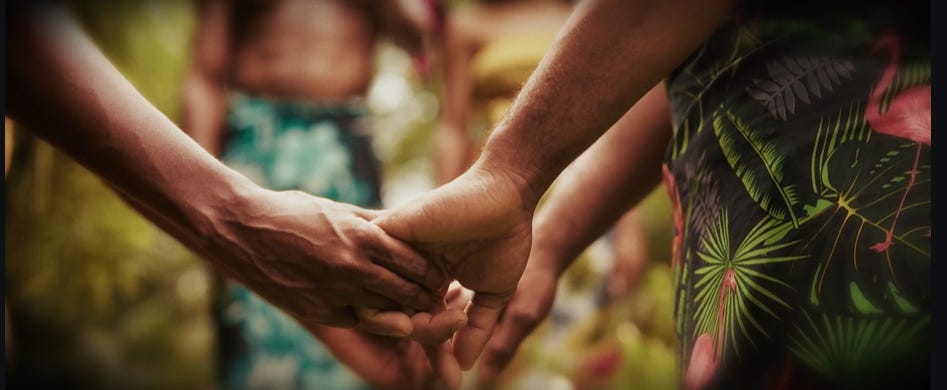
The Cult of NatureBoy
I want to address that second question first, because it is wrong, and it matters that it is wrong.
The people who joined Carbon Nation were not naive. They were not broken in some unusual way. They were people, largely young, largely Black, largely American, who had reached a point where the life in front of them no longer made sense.
Many of them describe the same instinct. Not to fight the system. Not to reform it. But to leave it altogether. To build something else, somewhere else, from scratch.
For some, that came from how they experienced America growing up. For others, it was more personal. A lack of direction. A sense of being stuck. A feeling that the version of success they had been offered didn’t fit.
What Bishop offered was clarity and belonging. A simple enough idea, delivered with total certainty. That the problem wasn’t them, it was the world they were living in. And that the solution wasn’t to fix it, but to walk away from it.
“I’m done with America,” was how Aaron put it to me. Simply and entirely done.
Velvet Marquez, who would spend nearly four years in the group and have a child with Bishop, was living a low-income life in New Orleans when she found his videos. She told me she had felt invisible, not hurt, not angry, just absent from her own life. The group offered visibility. Community. Purpose.
“It was like waking up in paradise every day.”
Kendra, who met Aaron in the group and married him in a Las Vegas ceremony alongside three other Carbon Nation couples, had been raised in a structured, stable environment but without a clear sense of what came next. When she saw what he was building, it felt like direction. Like something to be part of.
None of them thought they were joining a cult. That’s not a naive observation. It’s the most important thing to understand about how this works. The word “cult” implies a moment. A line you cross. A door closing behind you.
The reality is slower than that. A series of decisions that make sense at the time. One step, then another, then another, until you are somewhere you never planned to be. And by that point, the person who brought you there has made the alternative feel worse than staying.
The architecture of control
What Eligio Bishop built, across six years and multiple countries, was a system of psychological control. The tactics themselves were not new. What was new was how effectively he used social media to apply them.
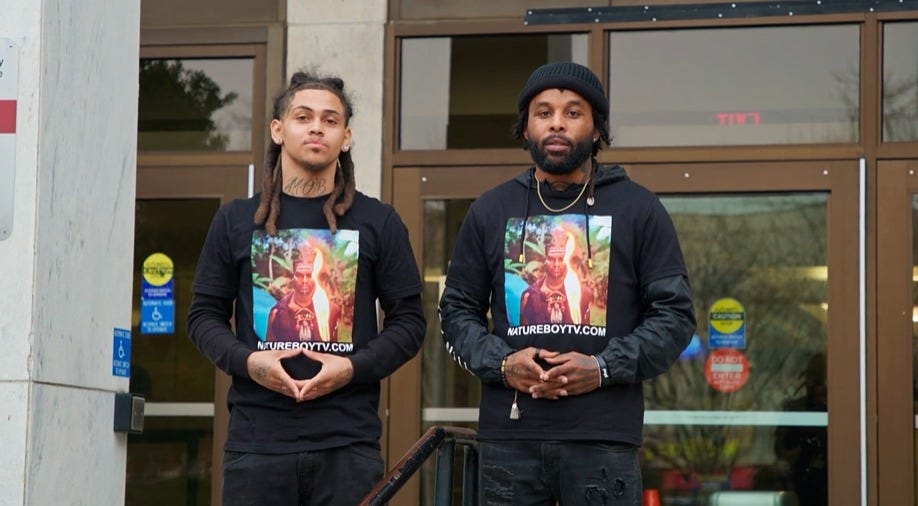
Supporters of NatureBoy
The system had five core elements.
First was identity erasure. When you arrived, you were given a new name. Not a nickname, a replacement. Your past was reframed as something to discard. Aaron became Tru. Velvet became Eliana. Kendra became Sheeba. As Velvet put it, when he called that name, he was calling the version of you he had created.
Second was information control. The group produced content constantly, and members were expected to live inside it. You watched, shared, and repeated it all day. Outside voices were dismissed as “demons.” Doubt was treated as failure. Over time, repetition did the work. As Aaron said, the mind absorbs what it hears over and over.
Third was thought-stopping. In Carbon Nation (the evolution of Melanation), that word was “demons.” Anyone who questioned, criticised, or left was reduced to that single idea. It ended the conversation before it could begin.
Fourth was triangulation. Bishop set members against each other, creating a constant competition for his approval. Alliances shifted. Trust broke down. The only stable relationship was with him.
Fifth was hierarchy. There was an A-Team and a B-Team. Promotion and demotion. Members were not competing with him, they were competing with each other for his attention and approval. As Aaron put it, your ultimate relationship became with the leader.
Together, these mechanisms created something that looked like a community and, for a time, felt like one. People ate together, lived together, built a shared world. For many, the early period was genuinely joyful.
People do not leave because everything is bad. They leave when it becomes bad enough, when the distance to the exit is short enough, and when there is somewhere to go. Not everyone reaches that point.
The man himself
I spoke to Eligio Bishop many times. More than I care to remember. From jail, on the Securus phone system, in twenty-minute blocks that he would string together for hours. I also spoke to him multiple times before his arrest, years ago, early in the process, when he was trying to steer us into making the film he wanted rather than the one we were making.
It was one of the most unusual conversational experiences I’ve had in fifteen years of making documentaries. He could be compelling. Quick, perceptive, often funny. He understood how to hold attention, how to make you feel like you were being let in on something important. You could see how people ended up following him.
But the calls were also exhausting. Hours of circular monologues, jumping between grand claims, fragments of pseudo science, and his own mythology. He would talk and talk, rarely stopping, rarely listening. What felt sharp at first would stretch, repeat, and lose shape. The same ideas, over and over again, until they started to feel like something you were supposed to accept rather than question.
That combination mattered. The charm drew people in. The repetition kept them there.
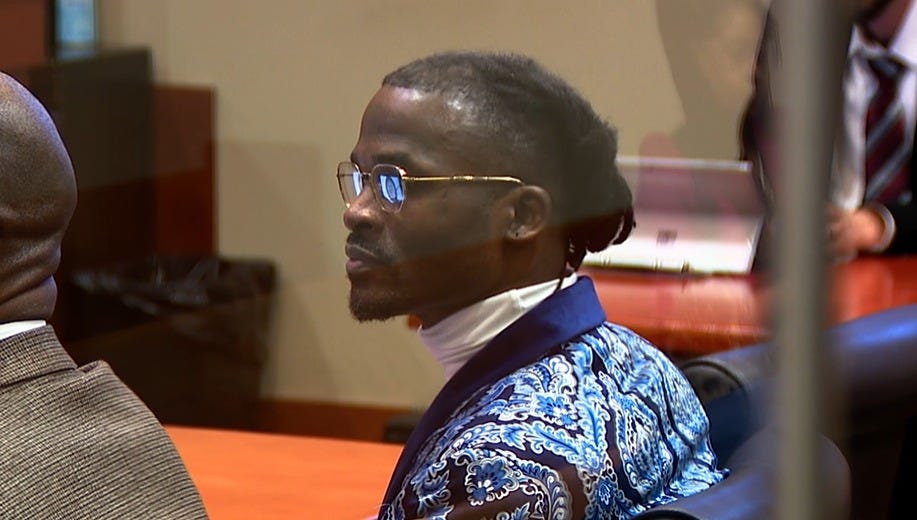
NatureBoy at his trial in 2024
The verdict, and what it doesn’t resolve
On March 1, 2024, Eligio Bishop was found guilty on all counts: rape, false imprisonment, and three counts of posting sexually explicit content without consent. He was sentenced to life in prison without the possibility of parole.
The judge, before announcing the sentence, called him a master manipulator and the classic definition of a narcissist. She said she would have considered showing discretion if he had shown any remorse. He had shown none. He stood in his orange jumpsuit, handcuffed, and told the court: “I see what y’all are doing, and I want you to know I forgive you.”
The Messiah narrative, to the very end.
The cult members, who had been through hell and back and made it out the other side, were the reason NatureBoy was in that court room at all. Jenae, who had been the primary complainant in the case, said: “Finally, someone believes me.” Velvet said she could now live her life in peace.
But the impacts of the cult are hard to fully shake off. Aaron still has around $24,000 in debt from when he maxed out his credit cards to join the group. He and Kendra are married, and have a child, but the financial damage of four years in Carbon Nation has not been undone by a jury verdict. Kendra told me: “My whole life felt like it was just shattered.” Some of the people who were in the group have gone back to families who won’t talk to them. Some are with other groups, searching for the same thing they were searching for before.
And the conditions that made Carbon Nation possible are not in prison. The algorithm that fed Aaron conspiracy videos until it served him a NatureBoy video is still running. The sense of political despair among Americans that made leaving feel more viable than staying, that is not resolved. The loneliness that Velvet described, the invisibility, the feeling of not mattering to the world you actually live in, that is an epidemic that predated the pandemic and survived it.
You can arrest one man. You cannot arrest the machine.
What this series is, and why we made it
The Cult of Carbon Nation is a four-part documentary series. It’s out now on Hulu in the US, and comes to Disney+ internationally in July. It was made by Zandland in partnership with an amazing team at ABC News Studios.
It is important because it is not really a story about one man. Eligio Bishop is in prison. Carbon Nation is over, what remains of it has rebranded, as if that means something. But the story of how a vulnerable population was identified, targeted, recruited, and controlled through a social media platform that was optimising for engagement rather than human welfare, that story is not over. That story is continuing in a thousand different forms, most of which we haven’t made documentaries about yet.
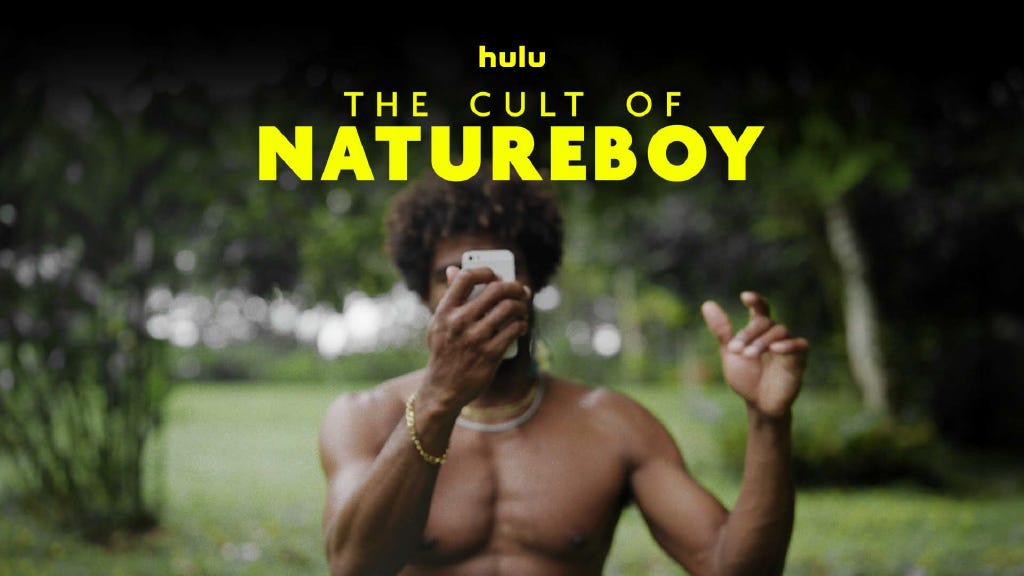
The Cult of NatureBoy is out now on Hulu. It comes to Disney+ internationally on 15th July 2026. The series is a Zandland production in partnership with ABC News Studios.