

Iran is the reason I got into journalism and filmmaking in the first place.
It was a place I heard about all the time growing up… My dad is Iranian, and Iran was an ever presence: family, stories, food, phone calls. It was a whole, confusing, world running in parallel to my life in Liverpool. But it was also a place I could only ever visit once. As a dual national, and later as a journalist who learned his chops at the BBC, going back carried real risk. Iran has a habit of jailing people with with my type of background.
My first articles and my first ever documentary was built around trying to understand Iran from the outside. Due to being unable to visit myself, I relied on talking to the people who were there, the people who knew a lot more than me. It was a country I was simultaneously obsessed with (I still am), but one I could just never truly feel for myself. That sense of needing to understand a story I cared deeply about, through the eyes of those who were truly living it, was basically how I learned to be a journalist. My job was to listen properly and pass it on.
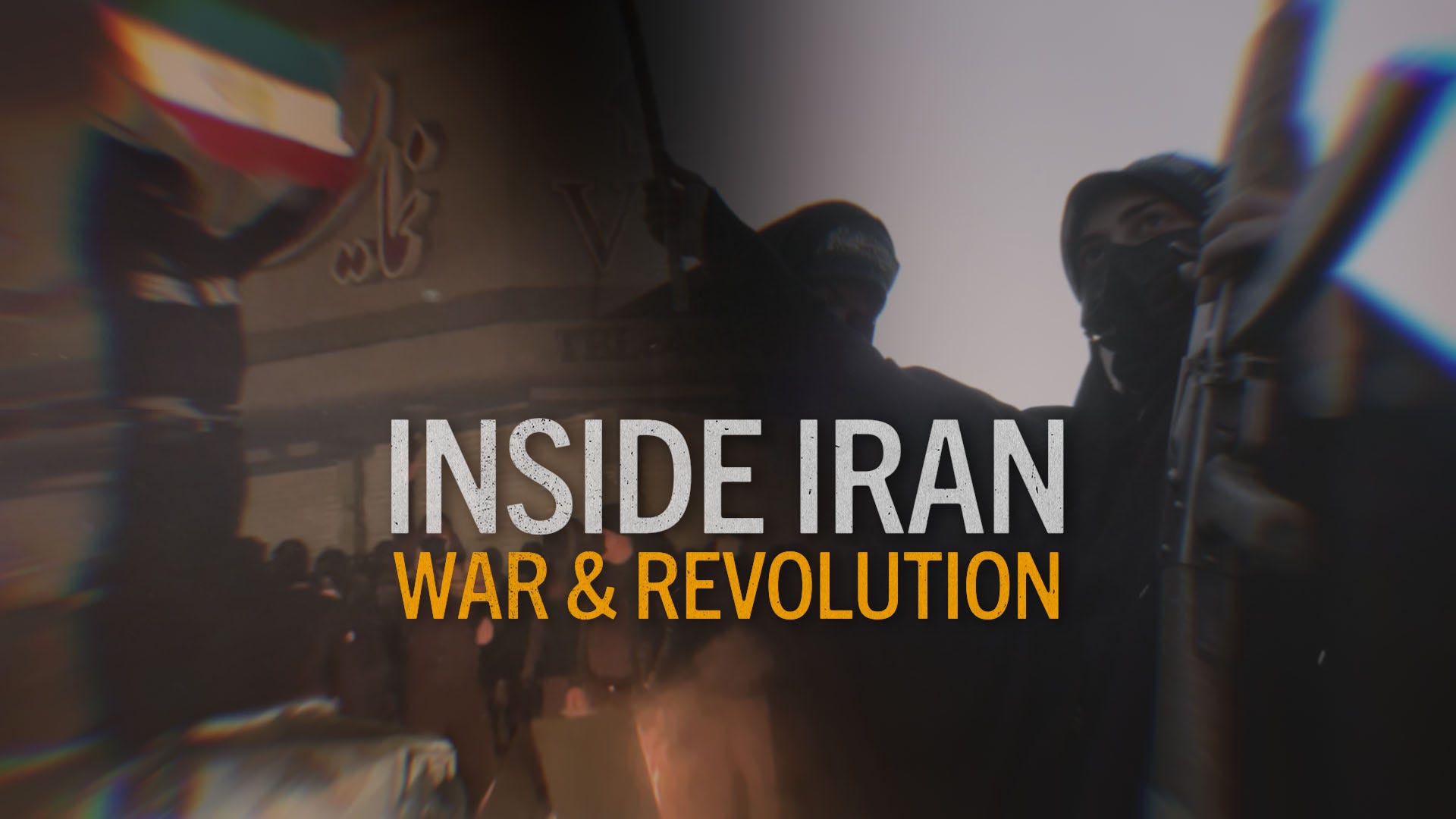
This Sunday’s film, Inside Iran: War & Revolution, follows that same understanding, at a moment that is painful and genuinely hard to comprehend for a lot of Iranians.
How do you get to the point where you want your own homeland to be bombed?
That’s the question we set out to answer at the heart of Inside Iran: War & Revolution. The film will air on ITV1 and ITVX in the UK, and on the Zandland YouTube internationally. Because when the attack came in February, a lot of Iranians welcomed it. Which may seem, by any definition, hard to understand. Some celebrated in the streets. From the outside, the whole conflict got explained in two simplistic ways: focusing on either hawkish exiles cheering war at any cost, or a proud anti-imperial state standing up to Trump and Netanyahu with its people behind it. As is always the case, the reality doesn’t really fit any of these. I wanted to understand the story properly, both personally, and in my work.
There’s one woman in the film who puts it all better than I ever could… She says:
“It’s like being trapped in a house with your child’s killer, whilst the wolves wait outside.”
It’s the most resonant line in the whole film, and it exemplifies the current situation. Because there is a strong argument that both sides of this conflict, amidst their many disagreements, share one key attribute: they don’t have the Iranian people’s best interest in mind. And the film explores what that reality does to people. And how grief, after thousands were killed for protesting in January, can curdle into wanting bombs at any cost.
How the film was made
We started in January, just after the protests, working with contacts on the ground in Iran, filming each day as it happened. Then the world changed, and the protesters we’d been following were suddenly living through a war.
Almost everything was shot inside Iran, by Iranians. It’s told through an anonymous filmmaker on the ground in Tehran. The majority of people in it are anonymised for their own safety, voices altered and faces hidden, because speaking out can mean prison or worse. When I started making the film I was worried that anonymity would mean distance, that people wouldn’t be able to really feel what it’s like to be there, experiencing this. But thanks to the incredible team we worked with, and beautiful style of the Director of Photography, this is a film with real characters and the realest stakes I’ve ever worked with, made by people taking extreme risks to get it out.
Side point: “brave contributors” always sounds like promo language, so here’s a specific version of what that means. One woman in the film had previously been taken from her home, blindfolded, and had a gun put to her head for giving an interview to foreign media. She then gave us an interview anyway. For her, there’s a sense of duty, a feeling she owe something to the families who lost people.
What happened next
I’m not going to spoil the arc, but this is something I’m sure you already know… the war did not deliver what the people who prayed for it hoped. Iran has undeniably changed, it is no longer the country it was. But whether that is for the better or worse is up for debate. Some people in the film speak of newfound freedoms when it comes to what women can wear, others speak of an increased focus on arresting people, and ramping up executions. The film sits inside that contradiction rather than pretending to resolve it. It’s also horribly current: there were public executions of protesters in Isfahan just last week, in the same square where the demonstrations began.
I talked through all of this with Lewis Goodall on LBC on Sunday. The video is above.
Inside Iran: War & Revolution. This Sunday, 10.20pm, ITV1 and ITVX in the UK, and on our YouTube channel internationally. The people who made it with us took on all the risk.
The links to watch will be available here on Sunday evening.
Thanks for reading.
Ben Z