

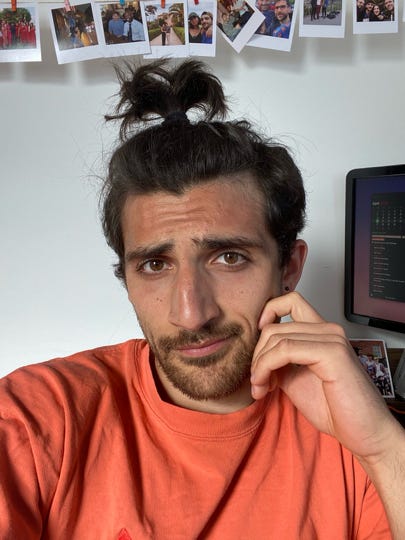
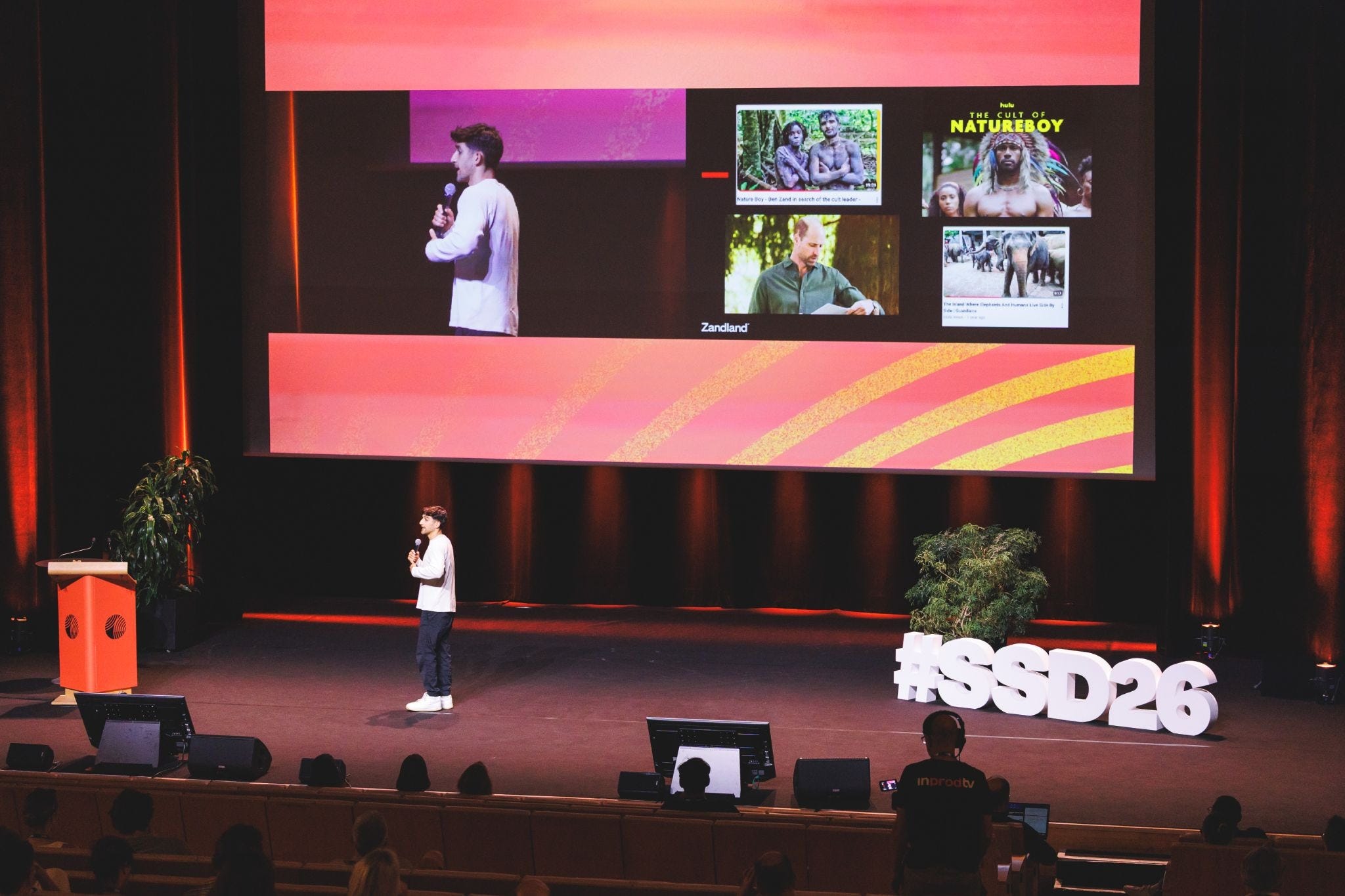
Yesterday I was on a stage talking about the time I had a top knot, in front of several hundred people from the TV industry: commissioners, producers, distributors. It was for a conference called Sunny Side of the Doc, and though the keynote wasn’t actually about my failed top knot era, that was a critical detail I needed everyone to know about.
I had actually been asked to give a keynote about the future of documentary, Zandland, TV and YouTube. It was also the week we were named one of Realscreen’s top 10 global innovators for production companies, so it felt like a good moment to try and say something useful, and innovative.
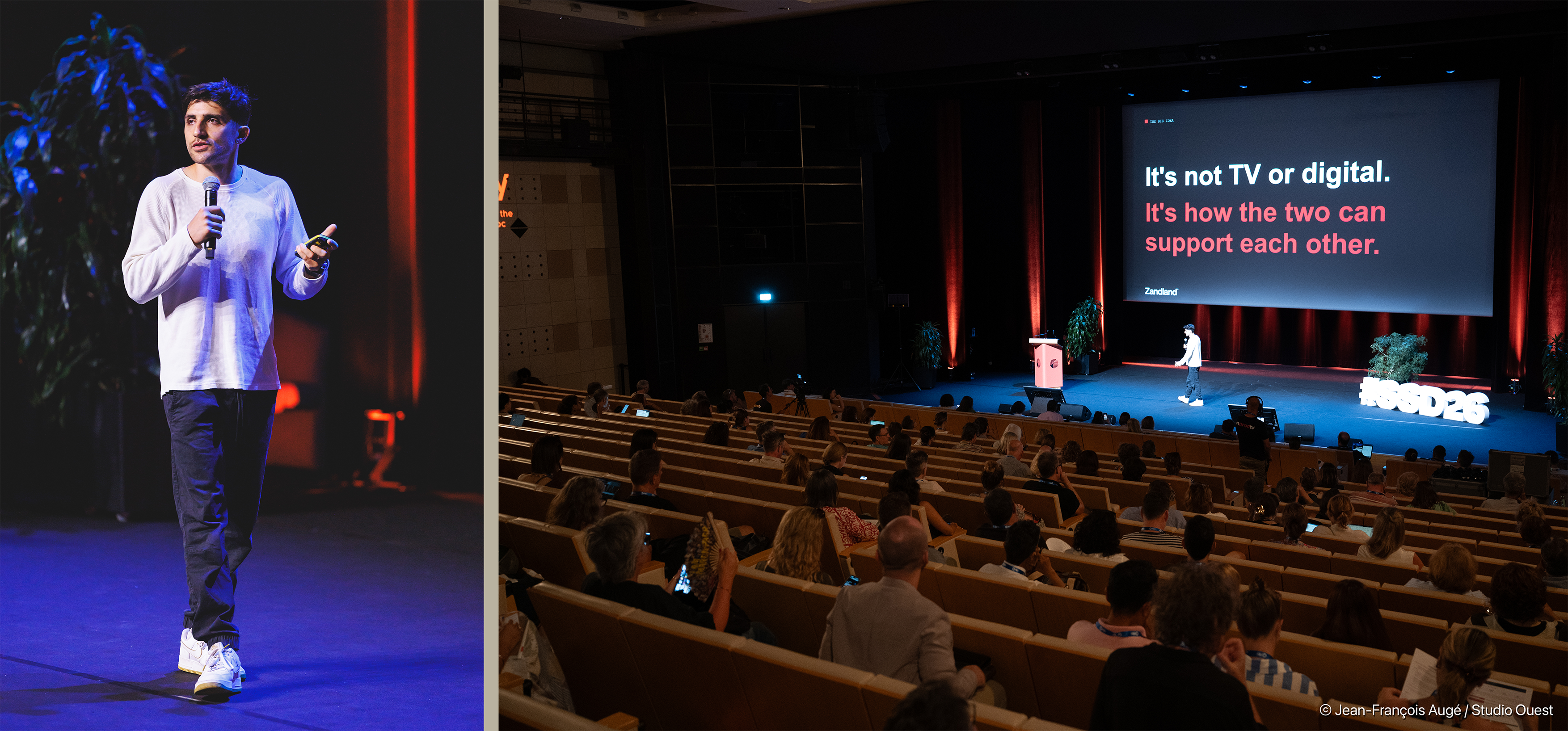
My take, despite the well documented struggles in the media industry right now, is that this is a pretty great time to be making documentaries. And I really mean that. The tools have never been more accessible, the audience has never been larger, and the ability to build something that belongs to you has never been more real. To explain why I believe that, I have to take you all the way back to 2012.
It’s a simpler time. I’m 21. I want to make documentaries more than anything in the world, but I have absolutely no idea how you actually do that. I have no contacts, no money and a strikingly empty email account from all the non-responses I’ve had from job applications…
I decide in a last-ditched hail mary to make a documentary myself. I’m British-Iranian, and I’ve only ever been to Iran once due to the sad reality that dual nationals don’t have the best track record in the country, so I’d always been fascinated by what I see as the next best thing, Tehrangeles. It’s the nickname for the biggest Iranian community outside of Iran, in Los Angeles. I save for a year, convince my brother to be the cameraman, my dad to be the fixer, and fly out to LA to make a film about it. An unruly team, but we did it.
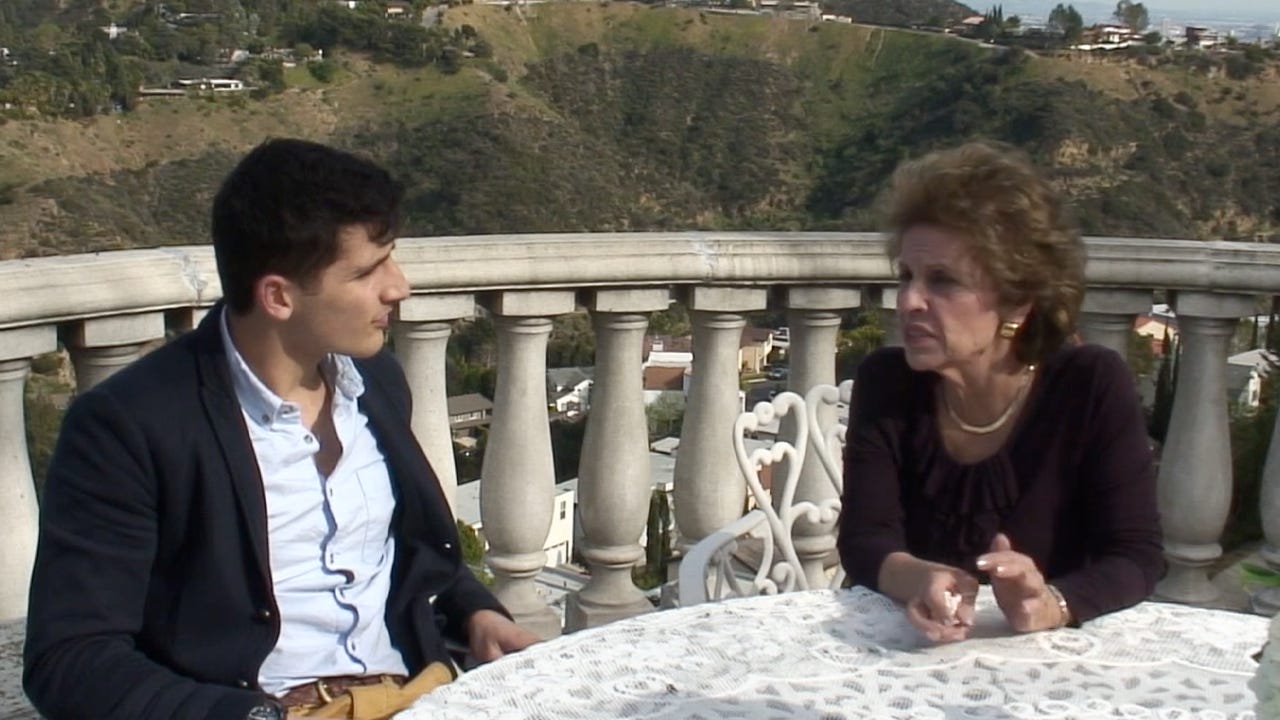
I put it on YouTube. It was terrible. It got fifty thousand views.
You can watch an unlisted version here if you want to (I warn you, it’s terrible):
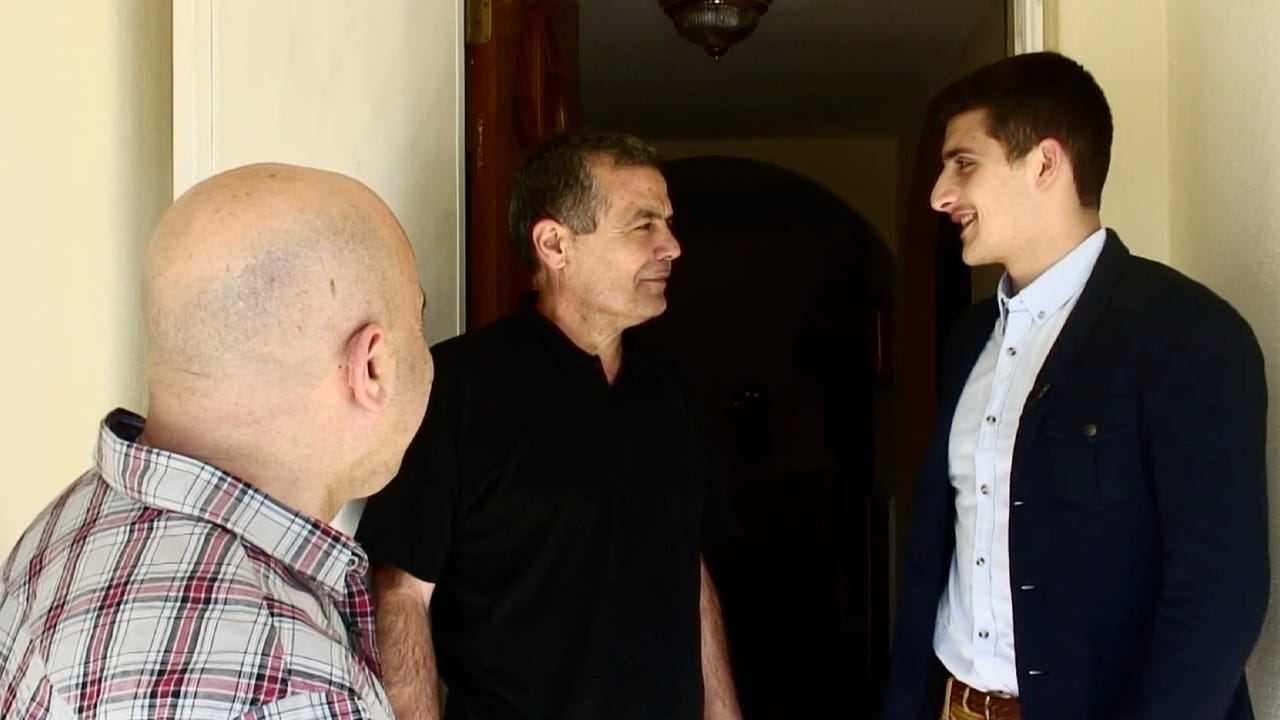
And then, not entirely sure what else to do, I move to London. I’m staying in a hostel because I can’t afford anything else. I’m sending emails to anyone at the BBC who might read them with a link to my documentary. Things are not looking great. And then, out of nowhere, that little YouTube film actually gets me an internship.
Here’s the thing though. At that point, even with the fifty thousand people who had watched my terrible little film, something I’d made with no money and a family camera crew, I did not for a minute think you could realistically build a documentary career off the back of YouTube. YouTube was just a completely different proposition to something like the BBC. Both had their place, but the BBC was where serious documentary makers went to have an actual career. The industry was gate-kept to decide who gets in, and rightly or wrongly, I felt like the only way to make the kind of work I actually wanted to make was through the gate. So I went through it.
The internship became a job. The job became a career. I ended up running something called BBC Pop Up, a mobile bureau filming documentaries around the world. And I loved it. The access and the sheer weight of what the BBC stands for. I’m very grateful for those years. But the reality of working inside a big institution, any big institution, is that there are a lot of people between you and the specific thing you want to make. Commissioners who greenlight. Executives who sign off. Layers of people whose job it is to decide whether your idea fits what they’re looking for right now. That process often exists for good reasons, but it also means a lot of ideas never get made.
At some point in that journey, around 2014, someone said to me:
“You should make your own YouTube channel instead of working for the BBC.”
And I was actually a bit annoyed. Because I was inside the gate now, working with some of the best people in the industry. Why would I step back outside it?
Some of you reading this might feel something similar right now. So hold that thought. Because what’s changed since then isn’t that one of those worlds has won. It’s that the relationship between them has become a lot more interesting.
Eventually I left. Not because the BBC was bad, I’m grateful for it, but because I’d always wanted to build something of my own. A company. An identity. Something I could actually control. There were also a lot of documentaries that just weren’t being made in the industry that I wanted to make, and I concluded the only real hope of doing that was to do something myself.
So, I quit my job.
Two weeks later, Covid locked everything down.
And there I am, in my home office with my best mate. We’ve never run a business. We have no money. No elite school connections. And for reasons I still can’t fully explain, I decide this is the moment to grow a top knot.
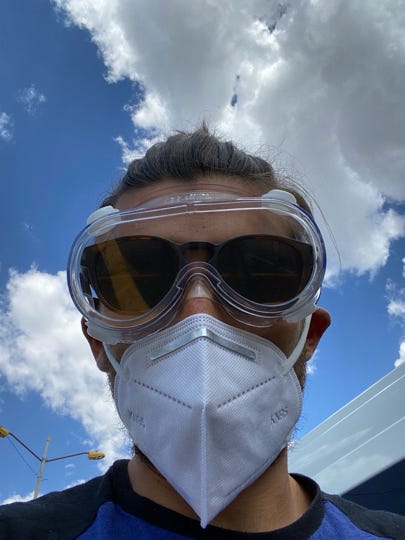
Things are not looking promising.
The TV industry already felt wobbly. Now with Covid the wheels felt like they were going to fall off entirely. But both of us could shoot, we could edit, we could get access to interesting people, and we had a relentless desire to make something we actually owned. So we pushed.
We didn’t really understand the independent production company business. It was a weakness, and a strength. It meant we had no idea about hierarchies, so we reached out to anyone and everyone and pitched ideas that probably were a bit ridiculous, but were ridiculous enough to get a conversation. We then spent five years making TV work we were proud of (thanks to a helping hand from Channel 4’s Louisa Compton, an early champion of Zandland), continuing to build the business through commissions, while we quietly figured out what we wanted to build alongside it. We knew we wanted to make our own content, our own platform. But we also knew it was going to take a while. We had no investment, and we wanted to start this on our terms, without a middle man. But what did we actually want to make independently? What were we genuinely good at? What gap existed that nobody else was filling?
When we studied the competition, the answer actually felt pretty obvious. Gonzo style, on-the-ground films with incredible access, that were entertaining, but also serious. Films that actually respect their subjects and treat the audience as intelligent. Those types of film were quite rare on YouTube. YouTube had a lot of great content, but in docs specifically, what existed was often built to outrage or just didn’t really have the principles we’d learnt you needed in a documentary. The space for something that did it in a different way felt wide open. And we were prepared to be relentless in figuring it all out… So we costed it up, saved up, and in October last year we launched HUMAN, fully self-funded, on our own terms.
What I told the room at Sunny Side is what I’ve found to be genuinely true since launching it: doing this has made our whole business easier, not harder.
HUMAN is a show I would have genuinely struggled to get greenlit. It’s a bit unusual, hard to describe in a meeting, occasionally risky. But when I walk into a room now and say “here’s the show, here’s the audience, here’s what they’re watching”, that’s a completely different conversation. There is now a clear path to build from YouTube originals to premium partnerships. One of our first digital shows just became a major Disney and Hulu series. Our original work has given us a name internationally, with brands, with commissioners, with audiences.
The digital work makes the TV work better. The TV credibility makes the digital work more authoritative. They feed each other.
It’s worth saying here that not everything works for us, and I spoke about that too. We made a film about the Bayaka people, it was extraordinary access, a genuinely important subject, exactly the kind of film I’d want to watch, and it just didn’t land on YouTube. The title was too worthy, the premise too broad, the audience didn’t know quickly enough what they were being promised. A commenter literally told us in the replies what was wrong with it. That kind of direct feedback loop just doesn’t exist in traditional TV. You learn faster, even when it’s embarrassing.
If you’re a Zandland member you can watch that film here (let me know what you think, I’m still very interested in the feedback).
Here’s the thing I believe, and what I was trying to say to that room.
And I think this applies whether you work in the media industry or not. Whether you’re a filmmaker, someone who just loves watching documentaries, or someone who’s always thought about making something of your own.
When I was twenty-one, putting fifty thousand views on a film I made with my brother and my dad and thinking it wasn’t a real career, the tools were nascent, the internet sometimes felt like a dumping ground, and the media industry’s gate was firmly kept. The only way in was making it through that gate, into the institutions, and that’s where I went.
Now, YouTube has a bigger share of American TV viewing than Disney or Netflix. Instagram has also just announced a major push into TV and long form. The tools to make a serious documentary have never been more accessible. A decent camera, a story worth telling, and the determination to see it through can take you further than almost anything else. The platform to distribute it globally, for free, to someone in Lagos and someone in Leeds and someone in Los Angeles all at the same time, that genuinely didn’t exist before. And the ability to build a direct relationship with an audience, to actually understand who’s watching and why, rather than guessing from viewing figures months later, that’s completely new.
Is it complicated? Yes. Is it relentless? For sure. A lot of things don’t work, publicly, and that’s humbling in a way that most creative work isn’t. And this era isn’t perfect. The algorithm can make you chase the wrong things, and there’s no executive carrying any of it for you.
But there is more opportunity to make the films you actually want to make, reach people who actually want to watch them, and build something that belongs to you, than there has ever been.
So, if you’re waiting for permission to make something: stop waiting. Make the smallest version that proves the audience exists. Make it cheaply enough that failure doesn’t kill you. Then build the system that lets you do it again. It’s working for us.
More soon, including a proper behind-the-scenes on what actually goes into making a HUMAN film, and why some stories land and others don’t.
One more thing: we’re hiring.
We’re looking for editors to work on our YouTube content. If you’re obsessed with documentary, understand what makes people watch something all the way through, and want to work on films that matter, get in touch at careers@zand.land.
As always, the films are on the channel if you want to watch. And if you want to follow along more closely, you’re already in the right place. Feel free to share this with someone who may find it useful.
Ben
Really enjoyed the honesty in this piece!